
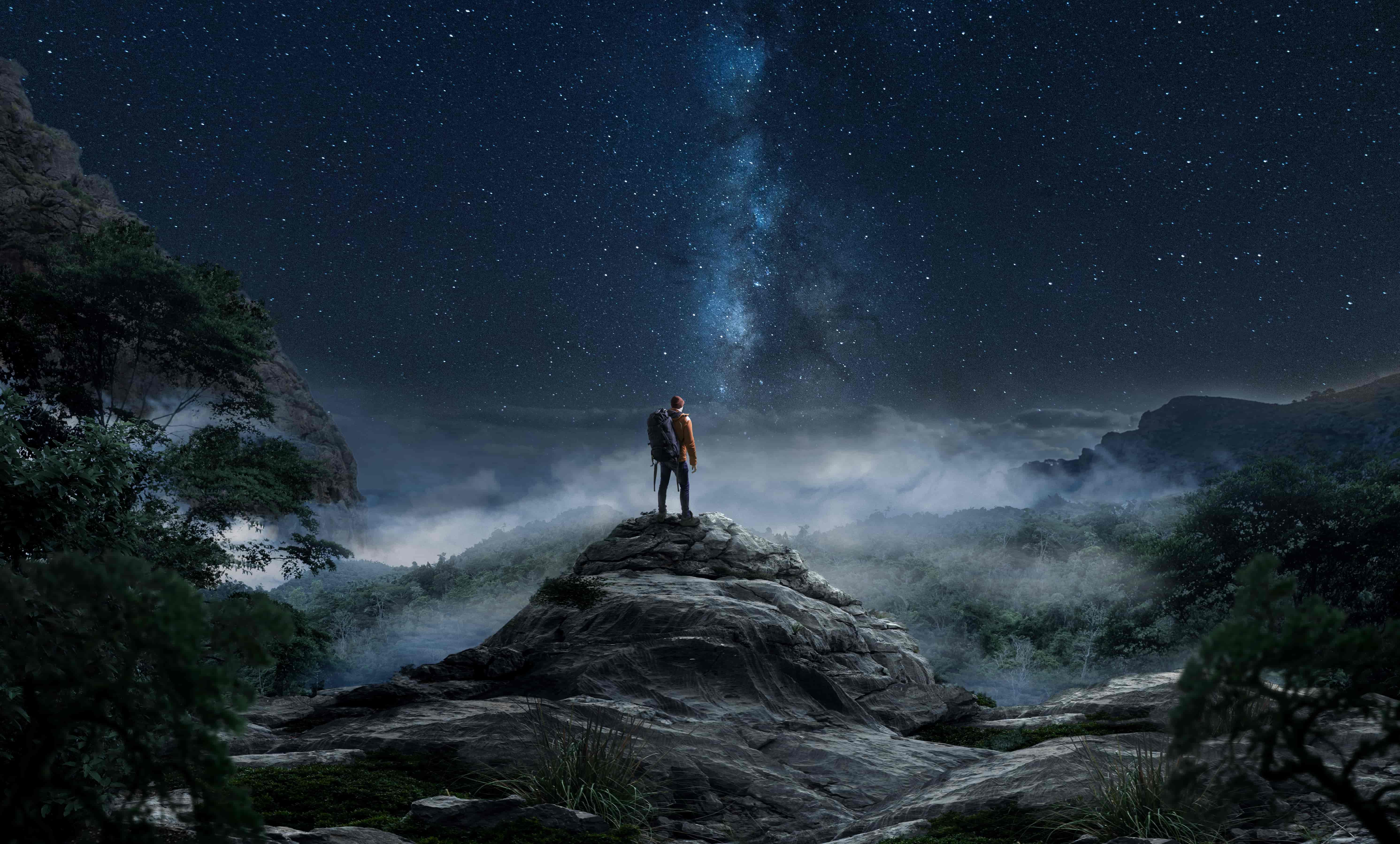
As global temperatures rise, the days are getting hotter, and harder to enjoy. In response, a new category of traveler has emerged, the "Noctourist." These travelers flip the script, sleeping in late and exploring the world after sunset. But Noctourism is more than just nightlife and clubbing.
It is about witnessing the natural wonders that only reveal themselves in the dark. From certified Dark Sky Reserves to glowing bioluminescent beaches, here are the best places to embrace the night in 2026.
The "Dark Sky" Pilgrimage
Light pollution has erased the stars for 80% of the world's population. Traveling to see the true night sky is now a luxury experience.
1. Hanle Dark Sky Reserve (Ladakh, India)
The Vibe: High-altitude silence. Located at 4,500 meters in the Himalayas, this is one of the newest and highest certified reserves in the world.
The Experience: The air is so thin and dry that the stars don't just twinkle; they burn. You can see the Milky Way with the naked eye. It is a spiritual, breathless experience.
2. NamibRand Nature Reserve (Namibia)
The Vibe: Desert solitude. This was the first "Gold Tier" reserve in Africa.
The Experience: "Star Beds." Luxury lodges here roll your bed out onto the deck. You sleep under a canopy of stars that stretches horizon to horizon, with only the sound of jackals in the distance.
3. Central Idaho Dark Sky Reserve (USA)
The Vibe: Rugged wilderness.
The Experience: For US travelers, this is the most accessible "true dark." In 2026, the reserve hosts "Star Parties" where astronomers set up massive telescopes for the public.
Beyond Stars: Other Noctourism Adventures
Noctourism isn't just about looking up. It’s about looking down and around.
1. The Glowing Oceans (Bioluminescence)
Puerto Rico (Mosquito Bay): Known among the best night tourism cities, Mosquito bay is still renowned as the brightest in the world. Kayaking here feels like paddling through liquid Avatar. Every stroke of your paddle lights up the water neon blue.
The Maldives (Vaadhoo Island): Known as the "Sea of Stars." The phytoplankton washes up on the beach, making the sand glow as you walk on it.
5. The Night Markets (Food Tourism)
In Asia, the culture lives at night.
Taipei, Taiwan (Raohe St. Night Market): It opens at 5 PM and goes until midnight. It is a sensory overload of stinky tofu, pepper buns, and neon lights. It is cooler, louder, and more vibrant than the city by day.
Bangkok, Thailand (Jodd Fairs): The heat of Bangkok breaks at sunset. This is when the locals come out to eat spicy ribs and shop for vintage clothes.
Why 2026 is the Year of the Night tourism cities?
The "Solar Maximum" (the peak of the sun's activity cycle) is expected to linger into 2026.
The Aurora Effect: This means the Northern Lights (Aurora Borealis) will be visible further south than usual. You might not need to go to the Arctic Circle; you might see them in Northern Scotland or Michigan.
The Strategy: Use apps like Aurora to track the Kp-index. If it hits 5 or 6, book a last-minute flight north.
Conclusion
The night proves a time to explore for night time globetrotters. Whether you are seeking the silence of the Himalayas or the electric energy of a Taipei market, "Noctourism" offers a cooler, quieter, and more magical way to see the planet. Pack a headlamp, turn off your phone, and look up.



