
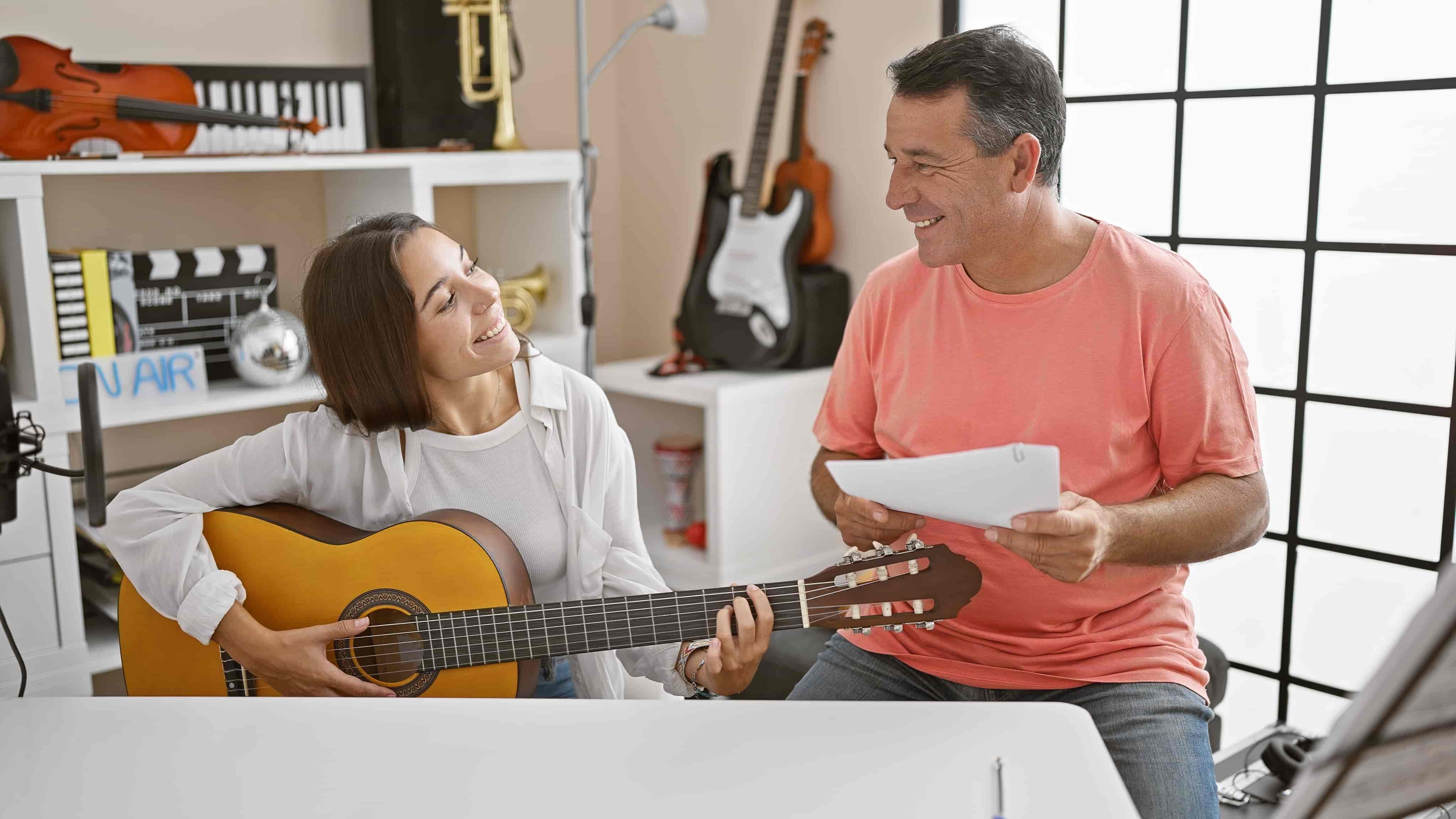
We often think of music lessons as a childhood rite of passage, something you do before you pay taxes and have back pain. But what if picking up a guitar at 45 doesn’t mean a midlife crisis, but rather a medical prescription?
In the busy workaholic world, the conversation around adult education has shifted from "hobby" to "health." Neuroscientists have confirmed that learning an instrument is one of the few activities that engages the entire brain at once and emphasized the prominent cognitive benefits of learning music. If you are looking for a way to stay sharp, fight stress, and expand your social circle, the music room is calling.
The Science: A "Gym Membership" for Your Brain
As we age, our brains naturally lose "plasticity", the ability to form new connections. This is why learning a new language or skill feels harder at 50 than at 15. However, recent studies from 2024 and 2025 have singled out musical training as a "super-stimulus" for neuroplasticity.
The "Corpus Callosum" Effect: Playing an instrument (especially two-handed ones like piano or drums) requires the left and right hemispheres of the brain to communicate instantly. This strengthens the corpus callosum, the bridge between the two sides.
The Memory Boost: Musicians have been shown to have superior "Working Memory." This is the ability to hold information in your head and use it (like remembering a phone number while dialing). For adults over 40, music lessons act as a buffer against age-related memory decline.
Music Therapy For Stress Relief: The Cortisol Killer
Life after 40 is stressful. Career pressure, aging parents, and raising children create a never ending trail of chronic stress. Music isn't just a distraction but a physiological intervention.
Active vs. Passive: Listening to music is great, but making music is better. The intense focus required to read a note and move your finger to the right key forces your brain into a "Flow State."
The Chemical Reaction: In this state, your brain cannot process anxiety. Studies show that just 30 minutes of playing can significantly lower cortisol levels. It is mindfulness without the meditation cushion.
Which Instrument Should You Pick?
The best instrument is the one you will actually enjoy playing. However, some are friendlier for adult beginners than others.
1. The Ukulele: The "Gateway Drug" of instruments. It has four strings (easier than a guitar's six), soft nylon strings (no finger pain), and you can learn a song in 30 minutes. It offers high reward for low effort.
2. The Piano: Great for visualizing music theory. It is linear and logical. Plus, you can buy a digital keyboard with headphones, so you can practice at 11 PM without waking the house.
3. The Harmonica: Excellent for respiratory health. It forces deep, diaphragmatic breathing, which mimics the effects of breathing exercises used for anxiety.
The Social Component: Beating Isolation
One of the hidden risks of aging is social isolation. Music solves this.
Choirs and Ensembles: You don't need to be a soloist. Joining a "Community Choir" or an "Adult Beginner Band" creates instant community. You are working toward a shared goal.
The "No-Judgment" Zone: Adult music classes are rarely about perfection. They are about participation. Everyone there is a beginner, which removes the ego and fear of failure.
Overcoming the "Too Late" Myth
"I'm tone deaf." "My hands are too stiff." "I don't have time." These are excuses, not reasons to stay away from music.
Time: You don't need to practice 2 hours a day. The "Micro-Practice" method (15 minutes a day) is proven to be effective for adult brains.
Talent: You aren't trying to headline Madison Square Garden. You are trying to build new neural pathways. The struggle is the benefit. If it were easy, your brain wouldn't be growing.
Conclusion
Your brain is not a static organ but a muscle that craves challenge. Individuals exploring neuroplasticity exercises for adults must consider diving into the deep ocean of music classes. Music provides that challenge in the most beautiful way possible. Whether you are strumming three chords on a ukulele or learning Bach on the piano, you are investing in your cognitive future. Put down the crossword puzzle and pick up an instrument. Your brain will thank you for the efforts.



