
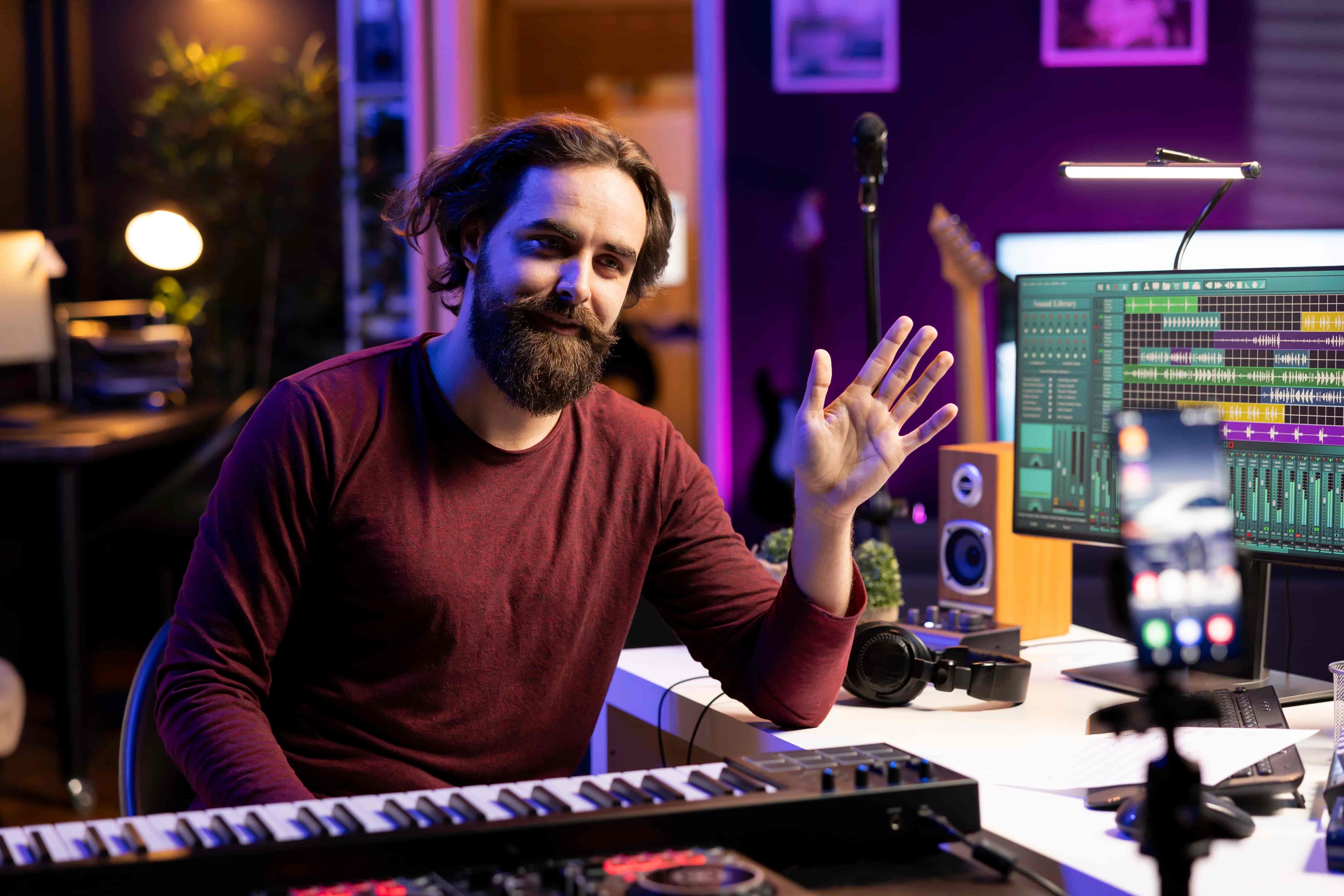
You want to learn piano, but you can't commit to driving to a studio every Tuesday at 5:00 PM. You tried a YouTube tutorial, but nobody told you your posture was wrong, and now your wrist hurts. Welcome to the Goldilocks problem of music education. One option is too rigid; the other is too lonely.
The music industry is exploring the "Hybrid Model" where virtual guitar tutors can teach music lessons to individuals at the comfort of their home. By combining the structure of human instruction with the flexibility of AI-driven apps, students are learning faster and cheaper than ever before. Is this the future of becoming a musician?
What is the Hybrid Model?
The Hybrid Model splits music education into two distinct parts: Knowledge Transfer and Feedback.
The Old Way: You pay a teacher $60/hour to watch you practice scales. This is a waste of their expertise and your money.
The Hybrid Way:
Mid-Week (App/AI): You use an app (like Flowkey, Yousician, or a teacher's custom portal) to learn the notes and rhythms. The app listens to you play and gives instant "Red/Green" feedback on accuracy.
The Lesson (Human): You meet with a teacher (in-person or Zoom) for just 30 minutes. Since you already know the notes, the teacher focuses on musicality—dynamics, emotion, and technique.
The Cost Benefit Analysis of Online vs in-person Music Lessons
This model is a massive win for the budget-conscious student. Let’s see how.
Traditional: 4 x 60-minute lessons = $240 - $300 per month.
Hybrid: Subscription to App ($20) + 2 x 30-minute "Check-in" lessons ($80) = $100 per month.
The Value: You are saving 60% while arguably getting more "reps" in because the app encourages daily gamified practice.
The Rise of "Asynchronous" Lessons
For the ultra-busy, live lessons are being replaced by Video Exchange platforms.
How it Works: You record yourself playing a song on Tuesday night. You upload it to a secure portal. By Thursday morning, your teacher sends back a personalized video commentary. They pause your video, draw on the screen to correct your finger position, and demonstrate the fix.
Why it Wins: You don't have to coordinate schedules. You get a permanent record of the feedback to re-watch. It eliminates the "performance anxiety" of playing live in front of a teacher.
Hybrid Music Classes are Best For?
The Adult Hobbyist: You have a job and kids. You can't guarantee you'll be free every Wednesday. Hybrid allows you to progress at 11 PM if that’s when you have time.
The Tech-Savvy Kid: Children in 2026 are "digital natives." They respond well to the gamification of apps (earning points/badges for practice) but still need the human connection to stay motivated long-term.
When You Still Need 100% In-Person Music Classes?
The hybrid model of learning music isn't for everyone.
Total Beginners (Violin/Wind/Brass): Instruments with complex physical ergonomics (holding a bow, forming an embouchure) require a teacher's physical touch to correct posture initially. You can't learn to hold a violin correctly from an iPad.
Advanced Serious Students: If you are prepping for a conservatory audition, you need the acoustic reality of a room and the intense, minute-by-minute critique of your music lessons through a master.
How to Choose a Hybrid Virtual Tutor?
Don't just download an app. Look for "Blended Learning Schools." These are physical music schools that have integrated tech. They offer a package: "Weekly App Assignments + Bi-Weekly Studio Sessions." This ensures you have a local human to turn to if you get stuck, preventing the high dropout rate of pure app users.
Conclusion
Technology hasn't replaced the music teacher. In fact, it has liberated them, and led to the emergence of remote music education trends. By letting AI handle the basics of "right note, wrong note," the teacher is free to teach you how to make art. The Hybrid Model respects your time, your wallet, and your intelligence. It’s the modern way to bring music into a busy life.



